maria@elevationmassagehou.com

Does Vitamin C Cause Acne?


“Vitamin C Makes Me Break Out.”
We hear this more often than you might think.
Someone adds a Vitamin C serum to their routine, a few blemishes appear, and the bottle promptly gets banished to the back of the bathroom cabinet.
The conclusion seems obvious: Vitamin C made me break out.
But the reality is more complicated.
Vitamin C itself is not typically considered a comedogenic, or pore-clogging, skincare ingredient. That doesn't mean every Vitamin C product will agree with every person's skin, though.
The formulation matters. The type of Vitamin C matters. The concentration matters. The other ingredients in the bottle matter. How the product has been stored matters. And your individual skin matters.
So if you've tried Vitamin C before and your skin rebelled, don't necessarily give up on one of skincare's most useful antioxidants.
Your skin may not hate Vitamin C. It may have hated that particular Vitamin C product.
First: What Does Vitamin C Actually Do for Your Skin?
Vitamin C isn't popular simply because skincare companies decided to put it in pretty orange bottles.
It's a well-established topical antioxidant with several potential benefits for the skin. Depending on the formulation and type of Vitamin C used, a well-formulated Vitamin C product can help protect against oxidative stress from environmental exposure, support the skin's natural collagen-production processes, improve the appearance of dullness, support a brighter and more even-looking complexion, improve the appearance of some types of discoloration, and complement daily sunscreen as part of an antioxidant-focused morning routine.
That makes Vitamin C particularly appealing for clients concerned about sun damage, uneven tone, post-breakout discoloration, dullness, and visible signs of aging.
So why does it sometimes get blamed for acne?
Vitamin C Isn't One Single Ingredient
When a label says “Vitamin C,” that doesn't necessarily tell you exactly what is inside the bottle. L-ascorbic acid is the biologically active form of Vitamin C and one of the most extensively studied forms used in skincare. Formulators may also use Vitamin C derivatives designed to improve stability, tolerability, or formulation characteristics. Different forms behave differently. Concentration matters, too. A stronger formula isn't automatically a better formula, particularly if your skin can't comfortably tolerate it. This is one reason we don't love choosing professional skincare based solely on whichever bottle advertises the highest percentage on the front.
Effective skincare isn't a contest to see whose serum has the biggest number.
So Why Might a Vitamin C Product Seem to Cause Breakouts?
1. It May Be the Formula, Not the Vitamin C
A serum is rarely made from one ingredient. The finished product may contain emollients, oils, silicones, botanical extracts, fragrances, preservatives, penetration enhancers, or other active ingredients.
A person's skin may respond poorly to something else within the formulation even though Vitamin C gets blamed because that's the ingredient printed in large letters on the bottle.
This is particularly important for acne-prone skin. A beautiful formula for dry, mature skin may simply be too rich for someone who is highly congestion-prone. Neither product nor person is necessarily “wrong.” It's a mismatch.
2. Irritation Can Look Like a Breakout
Not every cluster of little bumps is acne. An overly strong or irritating skincare product can contribute to redness, burning, itching, dryness, or small bumps that consumers may interpret as a breakout.
This can be especially confusing when someone introduces several active ingredients simultaneously. If you start a new Vitamin C serum, exfoliating toner, retinoid, and cleanser in the same week and your face becomes furious, figuring out the culprit becomes skincare detective work.
That's why we generally prefer introducing new active products one at a time.
3. Stability Matters
Vitamin C, particularly L-ascorbic acid, can be challenging to formulate because it is susceptible to degradation when exposed to factors such as light, air, and heat.
Good formulation and packaging matter. This is one reason professional skincare manufacturers invest heavily in stabilization, formulation chemistry, packaging, and delivery systems rather than simply adding Vitamin C to a base and calling it a day.
If a Vitamin C product has significantly changed color, odor, or consistency, it's worth checking the manufacturer's guidance before continuing to use it.
4. The Concentration May Be Too Much for Your Skin
The internet has conditioned us to assume that if 10% is good, 20% must be twice as good. Skin doesn't work that way.
Higher concentrations can also increase the potential for irritation in some people. Sensitive, reactive, or barrier-impaired skin may benefit from a different Vitamin C derivative, concentration, or formulation than resilient skin.
This is where professional product selection becomes valuable. We're not asking, “What's the strongest Vitamin C?” We're asking, “What's the right Vitamin C for this skin?” Those are very different questions.
Does Vitamin C Cause “Purging”?
People often describe any breakout after beginning a new skincare product as “purging.”
True skin purging is generally associated with ingredients that increase cellular turnover and can accelerate the appearance of existing microcomedones. Vitamin C is not generally considered a classic purging ingredient in the way retinoids or certain exfoliating acids can be.
So if you begin using a Vitamin C product and suddenly develop significant new breakouts, don't automatically assume it's purging and you simply have to push through. Your skin may be telling you the formulation isn't right for you. Persistent irritation or worsening breakouts deserve reassessment, not blind perseverance.
Does More Expensive Vitamin C Mean Better Vitamin C?
Not necessarily.
We love professional skincare, but an expensive bottle doesn't automatically contain a superior formula simply because it costs more. Price and quality aren't the same thing.
What matters is formulation quality: the form of Vitamin C, stability, concentration, pH when relevant, packaging, supporting antioxidants and ingredients, delivery system, overall formulation, and suitability for the client's skin type.
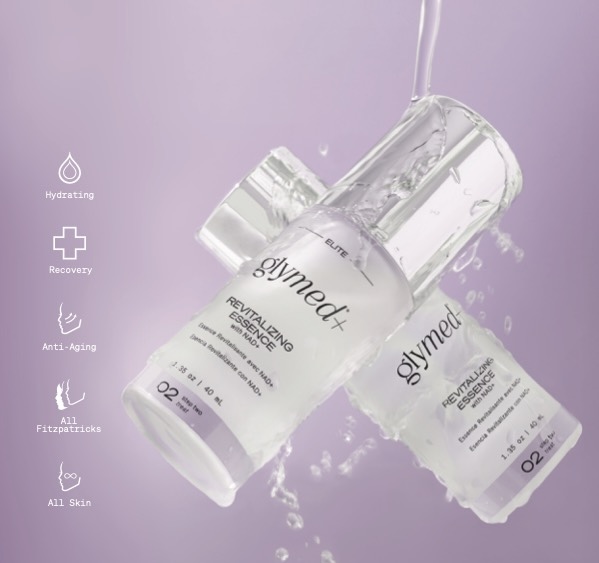
At Elevation, we've chosen to work extensively with GlyMed+ professional skincare because it gives our estheticians multiple professional options for different skin concerns rather than handing every client the same Vitamin C serum.
Can Acne-Prone Skin Use Vitamin C?
In many cases, absolutely. Someone with acne-prone skin may be particularly interested in Vitamin C because breakouts often leave behind post-inflammatory hyperpigmentation, the lingering dark marks that remain after the blemish itself has healed. The trick is selecting a formulation appropriate for acne-prone skin and fitting it intelligently into the rest of the routine.
If someone is already using salicylic acid, benzoyl peroxide, prescription acne medications, retinoids, exfoliating acids, or other corrective products, we don't necessarily want to pile every active ingredient onto the skin at once. More products don't automatically create faster results. Sometimes they just create a very expensive irritated face.
How to Introduce Vitamin C Into Your Routine
If you've had trouble with Vitamin C before, start thoughtfully. Introduce one new product at a time so you can actually evaluate how your skin responds. Follow the manufacturer's directions, and don't immediately combine a new Vitamin C product with every exfoliating acid and active ingredient you own.
For reactive skin, patch testing can also be helpful. And pay attention to your skin.
Mild differences in sensation can occur with some active formulations, but persistent burning, itching, significant redness, or worsening breakouts aren't something you need to endure because social media told you “that means it's working.” Skincare should challenge the skin only when appropriate. It shouldn't wage war against it.
Professional Vitamin C at Elevation
Vitamin C also plays a starring role in our Vitamin C Brightening Facial at Elevation Massage & Spa in Houston. This 60-minute professional treatment combines antioxidant-rich skincare with diamond microdermabrasion, customized professional exfoliation, brightening oxygen therapy, extractions when appropriate, and nourishing hydration to improve the appearance of dullness, uneven tone, rough texture, and discoloration.
By professionally resurfacing accumulated surface cells first, we create a smoother, brighter canvas before applying the corrective and antioxidant portions of the treatment.
And because brightening should never mean bullying the skin, the intensity is always customized to your barrier health and sensitivity.
Bringing Professional Skincare Home
The facial is only one hour. What you do with your skin during the weeks between appointments matters even more. Our estheticians can help you build a home routine using professional GlyMed+ skincare, including high-quality Vitamin C options selected according to your skin type, concerns, and existing routine.
Clients can also shop our Elevation GlyMed+ Skin Boutique online and have recommended products shipped directly to their homes.
Our philosophy isn't to send you home with the most products possible. It's to help you understand which products your skin actually needs and why.
Frequently Asked Questions
Can Vitamin C clog pores?
Vitamin C itself is not typically considered a pore-clogging ingredient. However, the finished product contains many ingredients beyond Vitamin C, and some formulations may be better suited to acne-prone skin than others.
Why did I break out after starting Vitamin C?
It could be related to the overall formulation, another ingredient, irritation, concentration, interactions with the rest of your routine, or an individual sensitivity. If breakouts persist or are accompanied by redness, burning, itching, or significant irritation, discontinue the product and reassess your routine.
Is Vitamin C good for acne scars?
It depends on what you mean by “scar.” Vitamin C may help improve the appearance of post-inflammatory hyperpigmentation, or dark marks left behind after acne. True depressed or raised acne scars involve structural changes in the skin and generally require different professional or medical treatment.
Should I use Vitamin C every day?
Many Vitamin C products are formulated for daily use, but frequency depends on the specific product, formulation, and your skin. Follow the product directions and adjust based on professional guidance and tolerance.
Should I use Vitamin C in the morning or at night?
Vitamin C is commonly used in the morning because its antioxidant properties complement a daytime skincare routine and broad-spectrum SPF. Some formulations can also be used at other times depending on manufacturer directions and the rest of your regimen.
Before You Break Up With Vitamin C...
If one Vitamin C product caused breakouts or irritation, that doesn't necessarily mean Vitamin C isn't for you. It may mean that product wasn't for you. The form of Vitamin C, concentration, stability, supporting ingredients, delivery system, and the rest of your skincare routine all influence how your skin responds.
Good skincare isn't about chasing the strongest ingredient or the latest viral serum. It's about understanding your skin well enough to choose the right formulation, at the right strength, in the right routine. And sometimes, that's exactly where professional guidance makes all the difference.
Consent of the client is required:
I understand that results will vary among individuals. I understand that although I may see a change after my first treatment, I will likely require a series of sessions to obtain my desired outcome.